
Product · CDN
Global CDN
Deliver websites, APIs, downloads and media from edge nodes close to users. Fetch from origin only on cache miss or for dynamic requests, with HTTP/3, TLS 1.3, cache rules and multi-origin fetch.- Anycast + GeoDNS
- HTTP/3 (QUIC)
- TLS 1.3 + 0-RTT
- Origin Shield
CDN
Cache static content, accelerate dynamic requests
Edge nodes and route selection
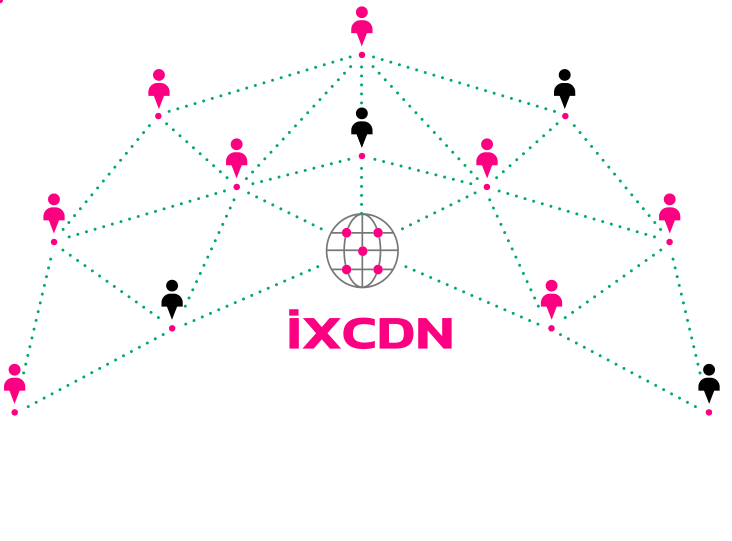
Anycast announces the same IP from multiple nodes; GeoDNS picks an ingress by region, carrier, ASN and recent latency, favoring the better path for cross-network or cross-border traffic.
HTTP/3, TLS 1.3 and compression
HTTP/3 (QUIC), HTTP/2, TLS 1.3 and 0-RTT, with Brotli for text assets. On mobile and weak networks this mainly cuts handshake and transfer overhead.
Dynamic request acceleration
Reuse TCP connections and optimize the origin path for uncached API and page requests. Origin Shield, multiple origins with primary/backup or weights, and health checks handle failover.
Cache rules and cache keys
Set cache keys and TTL by URL, query parameters, headers, cookies and device. Prefetch, serve stale, cache sharding, purge by URL or directory, and full purge are supported.
Large files and streaming
Installers and video use chunked cache and resumable transfer. Live supports RAM cache and HLS/DASH/HESP; VOD can use chunked cache and access control.
Image processing
Convert to WebP or AVIF by Accept header, and crop, resize or adjust quality per device. The original stays at origin; the edge generates derivatives from request parameters.
Edge Functions
Run JavaScript at the edge to edit request or response headers, rewrite URLs, run A/B tests, check auth and transform responses. Logic runs on the node, not on every origin request.
Configuration and API
Manage cache, certificates and security rules through the console, API and Terraform. Changes are versioned and pushed to edge nodes, so they fit existing release workflows.
Common issues
Common issues and fixes
Slow API responses
Connection reuse and origin path optimization cut TCP/TLS handshakes and cross-network round trips.
Jittery cross-border routes
Anycast ingress plus GeoDNS routing avoids congested paths by carrier and recent latency.
Traffic spikes hitting origin
Cache hits, rate limits and Origin Shield absorb bursts; only misses and dynamic requests go to origin.
Switching between origins
Primary/backup, weights and health checks provide failover when an origin degrades.
Low cache hit ratio
Review cache keys, TTL and query-string handling, then add prefetch or tiered caching.
Differences
IXCDN vs a traditional CDN
| Area | Traditional CDN / assembled stack | IXCDN |
|---|---|---|
| Setup | Usually requires a CNAME change, then separate certificate, cache and security configuration; multi-product setups need extra integration work. | Add a domain and verify DNS. Certificates, cache and baseline protection apply with defaults, then you tune them per workload. |
| Network and routing | Mostly DNS round-robin or fixed carrier routes; cross-network and cross-border quality depends on carrier interconnects. | Anycast ingress plus GeoDNS routes by region, carrier, ASN and recent latency to avoid congested paths. |
| Dynamic requests | Mostly static cache; dynamic APIs need a separate acceleration product or origin-side tuning. | The same ingress reuses connections, optimizes the origin path, and supports Origin Shield and multi-origin health checks. |
| Cache control | Cache rules and purge options vary by product; bulk changes often go through support tickets. | Set cache keys, TTL, prefetch, serve stale, purge by URL or directory, and full purge from the console or API. |
| Security | WAF, DDoS and bot protection are often bought separately, with rules and logs in different consoles. | WAF, DDoS, bot protection, token validation and access control run at the same edge ingress. |
| Edge logic | Needs an extra compute product, or the logic stays at origin. | Edge Functions run request/response rewrites, auth checks and A/B tests on the node, not on every origin request. |
| Visibility and billing | Traffic, requests, security and logs sit in separate bills, making cost allocation hard. | Traffic, hit ratio, status codes, origin fetches and logs share one console; billing is by delivered traffic and each capability is a separate line item. |
Use cases
Where it fits
Gaming & Interactive
View solution →E-Commerce
View solution →Media & Streaming
View solution →SaaS & Enterprise
View solution →IXCDN